The Montealegre Journal
Castillo Coffee: The Colombian Variety Behind Monte
 By Juan Pablo Jubiz, Co-founder, Montealegre Coffee ·

In this guide
Castillo is a rust-resistant arabica variety bred by Cenicafé, Colombia's coffee research center, from a cross of Caturra and the Timor Hybrid. The coffee federation released it in 2005, and Colombia has since replanted hundreds of thousands of hectares with it. It is the variety in our Monte.
Named after a breeder, not a place
The name sounds like a farm or a town, but it belongs to a person: Jaime Castillo Zapata (1928–2001), a Cenicafé researcher who, with his colleague Germán Moreno, came up with the strategy behind the Colombia variety, the first composite variety in the country with genetic resistance to rust. Cenicafé's own question-and-answer bulletin on Castillo credits him with the first generations of the new variety as well, which is why it carries his name.
The official release came by Resolution 03 of May 13, 2005, signed by the Federación Nacional de Cafeteros, which made Castillo and its regional versions available to growers.
How Cenicafé bred it
Arabica pollinates itself, so a plant's seedlings tend to look a lot like the plant. To get something new, Cenicafé crossed two parents that cover each other's weak spots and then kept selecting, generation by generation:
- Cross Caturra (short and productive, but susceptible to rust) with the Timor Hybrid (highly resistant).
- Grow the first and second generations. The second one shows the widest spread of traits, so that is where breeders picked plants for resistance, vigor, short stature and bean size.
- Keep selecting through the third, fourth and fifth generations, until the traits stopped shifting.
- Test the best lines for five years at several locations, then mix the seed of the chosen lines into one variety.
Because of that last step, Castillo is not one genetic line but a composite (breeders also say multiline), made of improved lines that look alike in the field and carry different genes for rust resistance. A strain of the fungus that manages to break one line still has to deal with the others growing next to it, and Cenicafé says it keeps checking every line and can replace the ones that start showing heavy attack.
What the trials showed
Cenicafé compared Castillo with the Colombia variety, its older sibling from the same Caturra × Timor Hybrid cross.
| Trait (Cenicafé trials) | Colombia variety | Castillo |
|---|---|---|
| Supremo-size beans (above screen 17/64") | 52.8% (range 38.3–75.1) | 83.0% (range 70.0–92.0) |
| Production, kg of coffee cherry per plant per year | 5.75 (range 5.33–6.83) | 7.89 (range 6.35–8.78) |
| Plant | Smaller | Taller, with longer branches |
For green coffee buyers the bean size is probably the first thing on that table they look at. Cenicafé gave priority to lines with more than 80% Supremo beans, and the trial average was 83%, far above the Colombia variety. A bigger bean gets a higher export grade, which says nothing on its own about flavor; we went through the grades in Colombian Supremo vs Excelso.

Why Colombia planted so much of it
Coffee leaf rust (Hemileia vastatrix) is a fungus that makes the tree drop its leaves, and a tree without leaves can't fill its cherries. For a long time Colombia's farms were planted mostly with Caturra, which World Coffee Research lists as highly susceptible, and WCR says Caturra was thought to account for nearly half of the country's production.
When strong rust epidemics hit the regions planted with Caturra, the federation pushed a renovation campaign called "Colombia sin Roya." Cenicafé's numbers (from the SICA coffee information system, consulted in 2012) are 234,000 hectares renewed, more than 90% of them with Castillo varieties, which brought the area under resistant varieties up to 54%. WCR, looking at it from outside Colombia, describes a government-sponsored program that started in 2008 and paid for replacing more than three billion trees with Castillo.
Seven regional versions
Many articles about Castillo stop at the general variety, but Cenicafé also took the lines that performed best at each of its experimental stations and grouped them into regional mixes named after the station where they were selected. There are seven of them (Naranjal, Paraguaicito, Santa Bárbara, Pueblo Bello, El Rosario, La Trinidad and El Tambo), and a farm outside their zones is advised to plant general Castillo.
The Castillo Pueblo Bello bulletin is the one closest to home for us, since it was released in 2005 for Magdalena, Cesar, La Guajira and Norte de Santander, and its table of municipalities includes Convención, Teorama, El Tarra, San Calixto and Hacarí, in Catatumbo, where Monte comes from. We sell Monte as Castillo and don't claim any specific regional line for it, so this is background on the region rather than a label detail.
Resistance doesn't last forever
One of the questions in Cenicafé's bulletin is whether the rust resistance of Colombia and Castillo will stay as effective as it is now, and the answer given is "No." Over time, the forms of the fungus able to attack resistant plants become more common, so the breeders treat resistance as something to monitor and renew, and building Castillo as an adjustable mix of lines was their way of planning for it.
Costa Rica 95, which also comes from Caturra and the Timor Hybrid, was selected as a single line, and Cenicafé reports that some areas of Colombia have already seen it lose part of its resistance.
A few facts from the farm side
Cenicafé's bulletin also answers the questions growers ask most:
- First flowers appear about 11 months after planting in the field, so a first harvest can come at 18 to 19 months.
- Cenicafé recommends growing coffee between 1,300 and 1,700 meters. The trials that chose Castillo's lines all ran below 1,800 meters.
- Because the plant is a little bigger than Caturra, it gets more room: more than 7,500 plants per hectare, against about 10,000 for Caturra.
- It is not transgenic. It came from ordinary crossing and selection.
So, does Castillo taste good?
When Cenicafé cupped the Colombia and Castillo lines against Caturra, it found no difference in quality. Not everyone in specialty coffee accepted that, and in 2013 the Coffeelands blog of Catholic Relief Services described Castillo's cup quality as "the subject of some disagreement between the Federation and quality-focused roasters around the world."
We would not choose or reject a coffee for the variety name alone, and that is our recommendation, not a rule. The variety sets a ceiling; whether a given lot gets near it depends on the farm and its altitude, on how ripe the cherries were when picked, on processing and on roasting. A score on the SCA scale tells you more than the name on the label (specialty grade starts at 80 points, as we explain in what specialty coffee means).
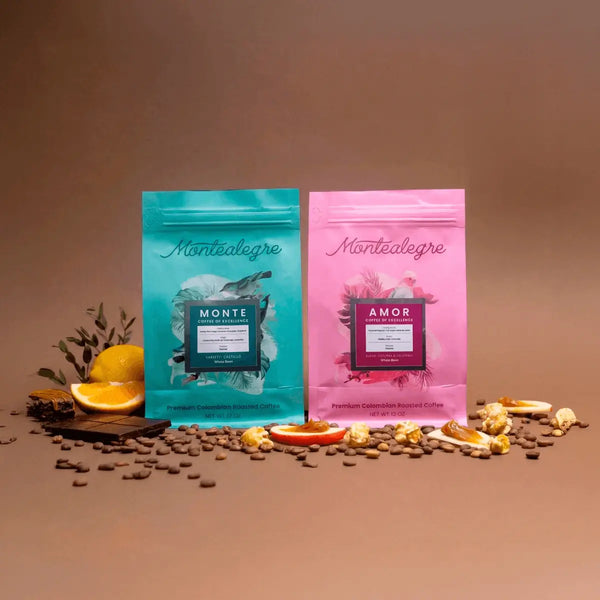
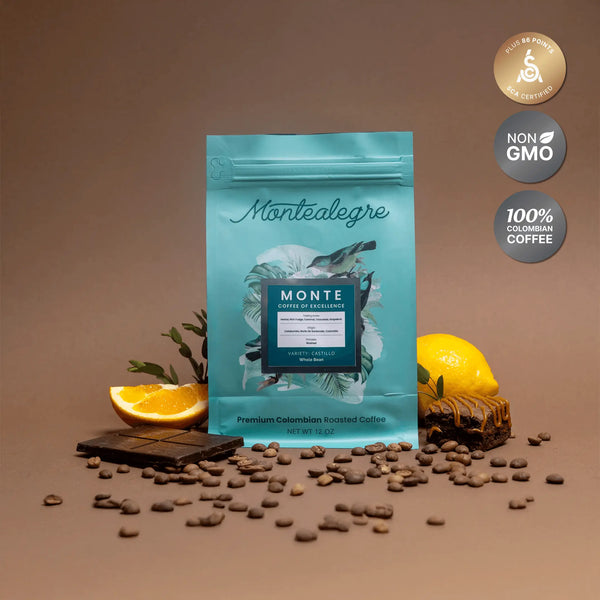
Monte, our Castillo
Monte is a washed Castillo from Catatumbo, Norte de Santander. It scores 86 on the SCA scale, inside the 85–89.99 "Excellent" band. It is a medium roast and comes as whole bean, in 12 oz bags. If you want it on a schedule, a Monte subscription takes 15% off, comes with a free handmade gift cup, and you can pause or cancel whenever you like.
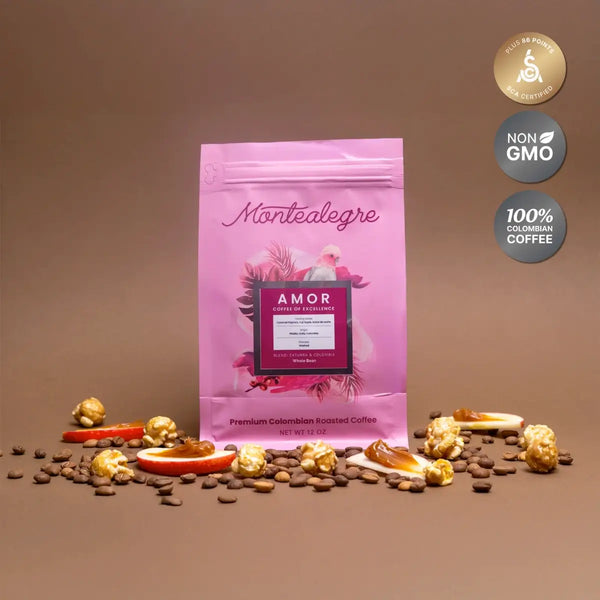
Amor, another of our coffees, comes from 23 women-led farms in Salado Blanco, Pitalito, Huila, and is made from Caturra and Colombia, that is, from one of Castillo's parents and from its older sibling. If you brew the two side by side you can judge for yourself how much the variety shows up in the cup. If origin is what you care about, start with single-origin coffee beans.

FAQ
Is Castillo coffee arabica?
Yes. Cenicafé states that every variety grown in Colombia, Castillo included, belongs to Coffea arabica. For the longer answer, see is Colombian coffee arabica.
Why is it called Castillo?
After Jaime Castillo Zapata (1928–2001). With Germán Moreno, he designed the strategy behind the Colombia variety at Cenicafé, and he worked on Castillo's first generations too.
Is Castillo a GMO?
No. Castillo came out of conventional breeding: Cenicafé crossed Caturra with the Timor Hybrid and selected the offspring over several generations, with no genetic engineering involved. Its bulletin answers this exact question.
What is the difference between Castillo and Caturra?
Caturra is a spontaneous dwarf mutant of Bourbon found in Brazil about a century ago, and rust attacks it easily. Castillo was bred in Colombia from Caturra and the Timor Hybrid, so it resists rust, grows into a somewhat bigger plant and produces more large beans.
Is Castillo good coffee?
It can be. In Cenicafé's own tests it cupped no differently from Caturra, and some quality-focused roasters have pushed back on that. Our suggestion: check the score, taste it, and decide for yourself.
Sources (checked November 23, 2026)
- Cenicafé, Avances Técnicos 426, "Variedad Castillo: preguntas frecuentes" (2012): https://publicaciones.cenicafe.org/index.php/avances_tecnicos/article/view/491
- Cenicafé, Avances Técnicos 337, "Castillo: nueva variedad de café con resistencia a la roya" (2005): https://publicaciones.cenicafe.org/index.php/avances_tecnicos/article/view/1708
- Cenicafé, Avances Técnicos 341, "La variedad Castillo Pueblo Bello para las regiones de Magdalena, Cesar, La Guajira y Norte de Santander" (2005): https://publicaciones.cenicafe.org/index.php/avances_tecnicos/article/view/1700
- World Coffee Research, Caturra: https://varieties.worldcoffeeresearch.org/varieties/caturra
- CRS Coffeelands, "The origins of the Castillo cultivar" (2013): https://coffeelands.crs.org/2013/01/the-origins-of-the-castillo-cultivar/
- Specialty Coffee Association, Protocols & Best Practices (Revised 2018, PDF copy): https://www.scith.coffee/wp-content/uploads/2021/03/SCA-Protocols-_-Best-Practices.pdf