The Montealegre Journal
Single Origin Coffee Beans: What the Label Really Means
 By Juan Pablo Jubiz, Co-founder, Montealegre Coffee ·

In this guide
Quick answer: Single-origin coffee comes from one farm, one region or one country, according to the National Coffee Association. Because "one country" also qualifies, the label alone tells you little; look for a named region, farm or cooperative and the variety to know where your coffee really comes from.
Single origin, defined: coffee from a single farm, region or country, emphasizing one distinctive flavor profile with a strong sense of place (NCA, varieties).
The three levels of "single origin"
| Label says | What it tells you | Traceability |
|---|---|---|
| A country ("Colombia") | Grown somewhere in that country | Low |
| A region ("Huila") | Grown in one region with its own climate and altitude | Medium |
| A farm, estate or cooperative | Who grew it, or which group of growers | High |

All three are "single origin" under the NCA definition. The more specific the label, the more you know.
Why origin changes the cup
The NCA explains that a coffee's flavor depends on its variety and on terroir: soil, climate, sunlight, surrounding vegetation and altitude. Single-origin coffee shows that sense of place more clearly than a blend. How the coffee is harvested and prepared after picking also shapes the flavor.
Single origin vs. blends
| Single origin | Blend | |
|---|---|---|
| Source | One farm, region or country | Coffees from different places, combined |
| Goal | Show one place's character | A balanced, consistent profile |
| Availability | Can vary by season | More likely year-round (NCA) |
| Consistency | Can change harvest to harvest | Designed to stay consistent (NCA) |
Neither is "better." Per the NCA's lifecycle guide, roasters build blends from complementary coffees for balance and consistency; single origins are for tasting a particular place.
What to look for on the bag
- The most specific origin given. Region and farm or cooperative beat country alone.
- The variety. Caturra, Castillo, Bourbon and others are arabica varieties; naming one means the seller is telling you more about where the coffee came from.
- A quality score, if published. On the SCA cupping scale, 80 points and above is specialty.
- Roast level. Lighter roasts keep more of a coffee's unique qualities, per the NCA.
How Monte and Amor read
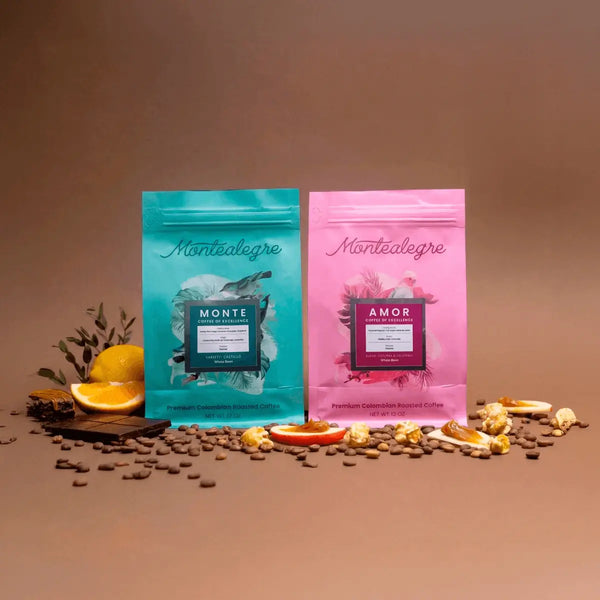
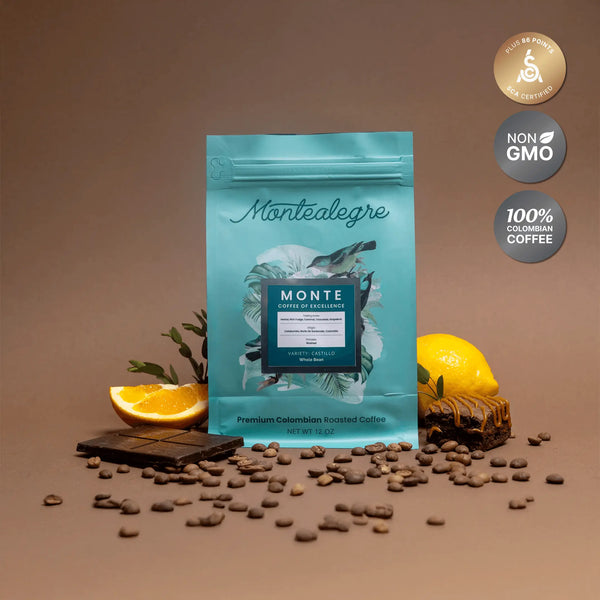
- Monte: Castillo, from Catatumbo. Herbal and grapefruit notes.
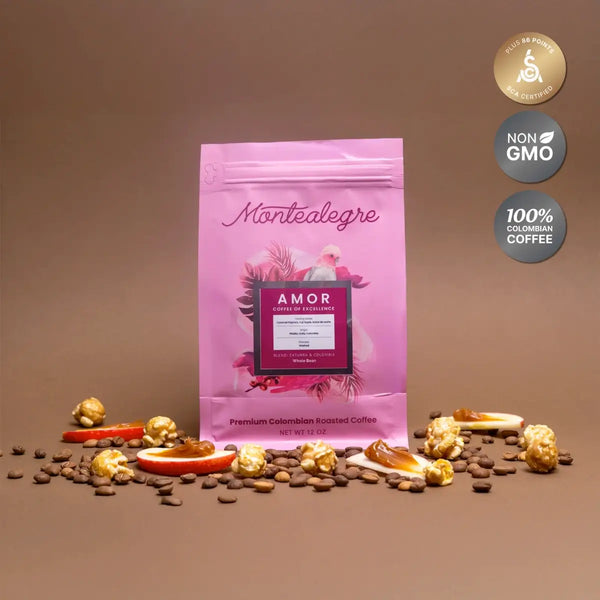
- Amor: Caturra and Colombia varieties, from Salado Blanco in Pitalito, Huila, grown by 23 women-led farms.

Both are 86 SCA and medium roast, available as whole bean in 12 oz bags. Because Monte and Amor come from two different Colombian regions, the Montealegre Duo is an easy way to taste how origin changes the cup. Our coffee sampler guide shows how to taste them side by side, and our Colombian coffee guide covers the country's regions. And if you've ever wondered about the spelling: it's Colombian, not Columbian.
FAQ
Is single origin coffee better?
Not by definition. It shows one place's character; a blend aims for balance and consistency. Quality depends on the coffee, not the label.
Is Colombian coffee single origin?
A bag that says only "Colombia" is single origin at the country level. Coffees named for a region or farm, such as Huila or Catatumbo, are more specific.
Why does single origin coffee taste different each season?
It comes from one place and one harvest, so it can vary; blends are built to stay consistent (NCA).
Sources (checked November 18, 2026)
- NCA varieties (single origin, terroir): https://www.aboutcoffee.org/beans/varieties/
- NCA lifecycle (blends): https://www.aboutcoffee.org/origins/lifecycle-of-coffee/
- NCA roasts: https://www.aboutcoffee.org/beans/roasts/
- SCA cupping scale (PDF copy): https://www.scith.coffee/wp-content/uploads/2021/03/SCA-Protocols-_-Best-Practices.pdf