The Montealegre Journal
What Is Specialty Coffee? The 80-Point Rule Explained
 By Juan Pablo Jubiz, Co-founder, Montealegre Coffee ·

In this guide
Quick answer: Specialty coffee is traditionally defined as coffee that scores 80 points or more out of 100 under the Specialty Coffee Association's 2018 cupping protocol. Its green beans must also pass a defect check: zero primary defects and no more than five secondary defects in a 350 g sample.
The scale
| SCA final score | Classification |
|---|---|
| 90–100 | Outstanding – Specialty |
| 85–89.99 | Excellent – Specialty |
| 80–84.99 | Very Good – Specialty |
| Below 80 | Below specialty quality – not specialty |
Source: SCA "Protocols & Best Practices" (Revised 2018), PDF copy.
How a coffee gets scored
Trained cuppers brew samples in a standard way and score attributes such as fragrance, flavor, acidity and body; defects are subtracted to reach the final score. The SCA cupping protocol even sets the water: clean and odor-free, not distilled or softened, about 93°C (200°F) when poured.
The green coffee check
Before cupping, the SCA's green arabica grading counts defects in a 350 g sample. Specialty Grade samples must have zero Category 1 (primary) defects and no more than five Category 2 (secondary) defects.
The SCA's newer approach
The SCA now also publishes the Coffee Value Assessment (CVA). "Rather than rely on a single score, the CVA combines four complementary assessment types to capture a full picture of coffee's value," the SCA explains (SCA, Coffee Value Assessment).
| Assessment | What it evaluates (per SCA) |
|---|---|
| Physical | Physical attributes such as color, defects, moisture content and size |
| Descriptive | Sensory attributes: aroma, flavor, texture and aftertaste |
| Affective | An evaluator's impression of coffee quality |
| Extrinsic | Information beyond the cup, such as certifications, origin traceability and processing |
The 80-point scale above comes from the 2018 protocol, and it's the scale our 86 scores are on.

What specialty doesn't guarantee
A score describes the coffee when it was graded. Roasting, storage and brewing still matter. Grind fresh, store beans airtight and away from light and heat, and measure your ratio.
Our scores
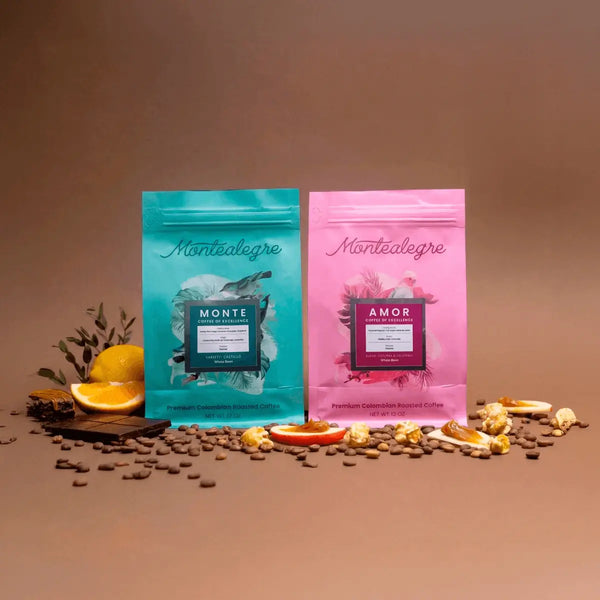
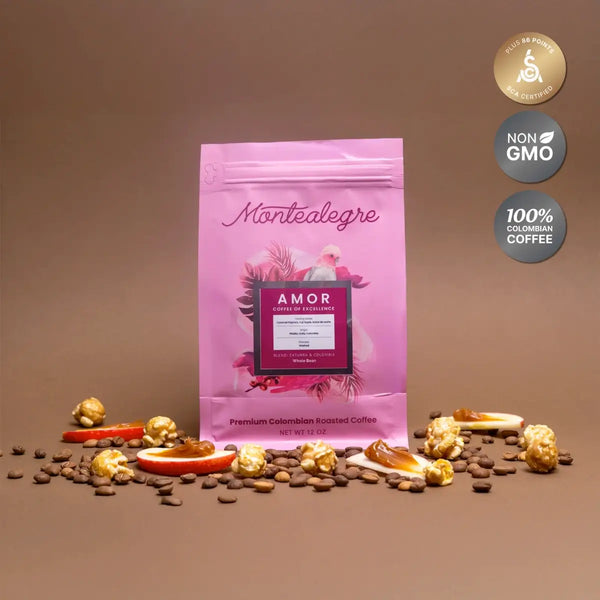
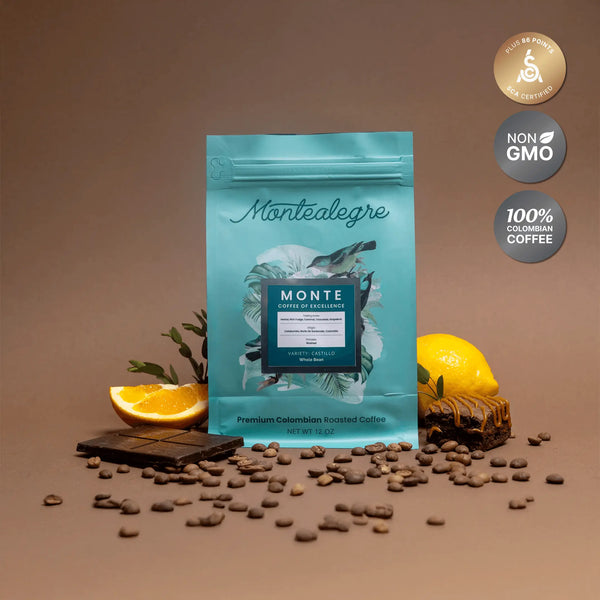
Monte and Amor both score 86 on the SCA scale, in the "Excellent" band. Monte is a Castillo from Catatumbo, Norte de Santander; Amor is Caturra and Colombia from Salado Blanco, Pitalito, Huila, grown by 23 women-led farms. Both are medium roast in 12 oz bags. A cup score is not the same as bean size (see Colombian Supremo vs Excelso), and it says nothing about sourcing on its own (see what ethically sourced coffee means). For origin, read single-origin coffee beans.

Sources (checked November 21, 2026)
- Specialty Coffee Association, Protocols & Best Practices (Revised 2018; PDF copy because sca.coffee no longer publishes the page openly): https://www.scith.coffee/wp-content/uploads/2021/03/SCA-Protocols-_-Best-Practices.pdf
- SCA, Coffee Value Assessment: https://sca.coffee/value-assessment