The Montealegre Journal
Ethically Sourced Coffee: What It Means and What to Ask a Brand
 By Juan Pablo Jubiz, Co-founder, Montealegre Coffee ·

In this guide
Quick answer: "Ethically sourced" isn't a single certification. It can mean a third-party label (Fairtrade, Fair Trade USA, Rainforest Alliance, organic and others) or a company's own sourcing standards. The useful test is traceability: who grew the coffee, through which cooperative or farm, and what the brand can show you.
Two kinds of standards
The National Coffee Association explains that coffee standards come from two places: certifying organizations that independently set standards, and coffee companies themselves. In fact, "all coffee companies set standards for the coffee they sell," the NCA notes, covering quality, how coffee is grown, and social and environmental conditions on farms (NCA, coffee certifications).
The main third-party labels
| Label | Who runs it | What it focuses on (per NCA summary) |
|---|---|---|
| USDA Organic | U.S. Department of Agriculture, National Organic Program | Rules for producing, handling and labeling organic products |
| Fairtrade | Fairtrade International | Social, economic and environmental criteria for small producer organizations and workers |
| Fair Trade USA | Fair Trade USA | Sourcing certification to improve livelihoods and protect the environment |
| Rainforest Alliance | Rainforest Alliance | Forests, climate, human rights and livelihoods |
| Regenerative Organic Certified | Regenerative Organic Certification (ROC) | Soil health, animal welfare, farmworker fairness |
| Bird Friendly | Developed by Smithsonian scientists | Habitat for migratory songbirds (foliage cover, tree height, biodiversity) |
A label tells you a specific standard was audited. It doesn't tell you everything: a coffee without a label isn't automatically poorly sourced, and a label alone doesn't tell you which farm grew your bag.
Five questions to ask any coffee brand
- Where exactly is it from? A region and a farm or cooperative, not just a country.
- Who grew it (farm or cooperative)? A named cooperative, farm or group of farms.
- What standard or program applies? A third-party certification, the company's own standard, or both. Ask to see it.
- What can you show (receipts, reports, visits)? Specific evidence beats broad adjectives.
- How is quality checked? For example, a cupping score on the Specialty Coffee Association (SCA) scale (here is what makes a coffee specialty).

How we describe our coffees
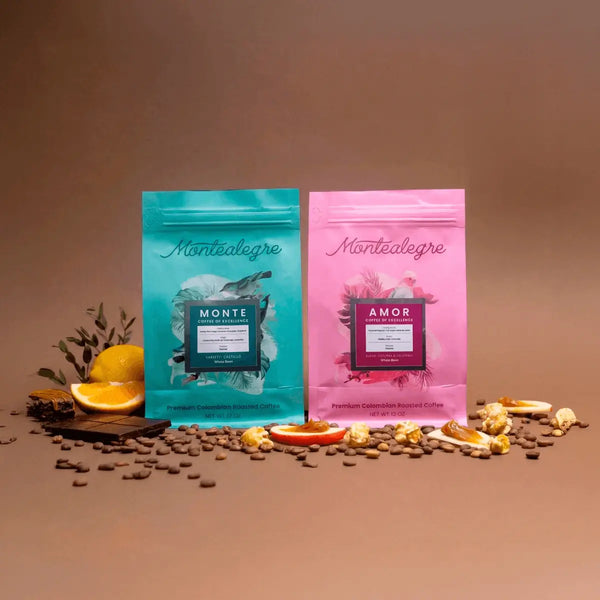
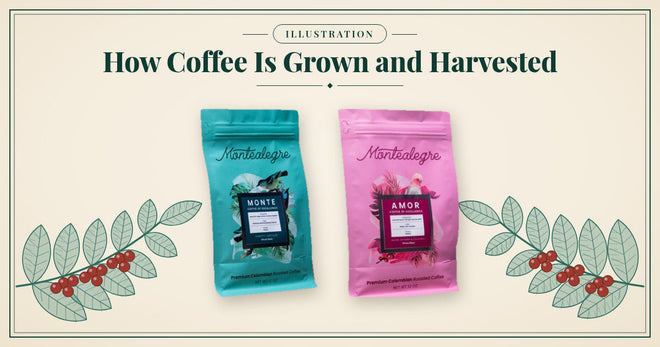
For Monte and Amor, we say exactly where they come from:
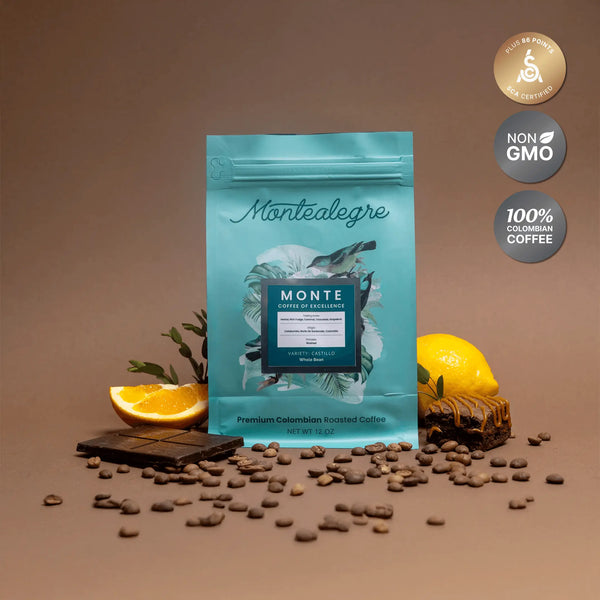
- Monte is a Castillo from Catatumbo, Norte de Santander.
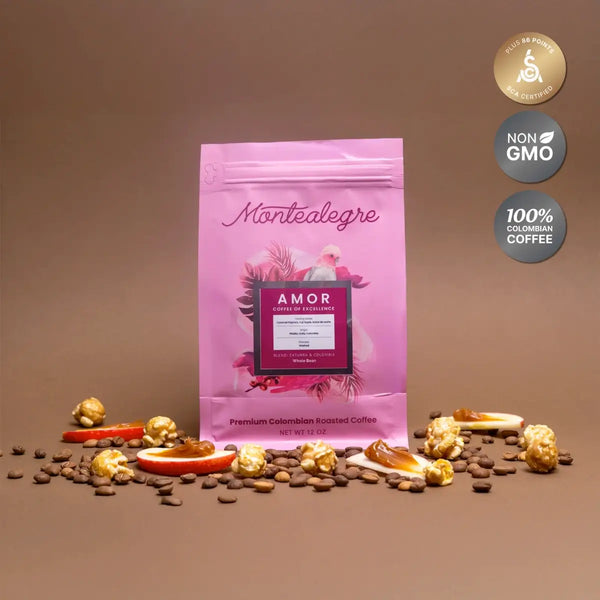
- Amor comes from Salado Blanco in Pitalito, Huila, grown by 23 women-led farms. It's Caturra and Colombia.
Both are 86 SCA and medium roast. For each one, we name the region and the variety, and for Amor, the farms that grow it. More on origin: what single-origin coffee means and why Huila coffee is prized.

Montealegre's founders are Juan Pablo Jubiz, Thomas Ospina and Sebastián Azcarate; Thomas's family, the Ospinas, has a coffee history that goes back to 1835.
What "ethical" can't mean on its own
Be wary of claims without specifics. "Ethically sourced," "sustainable" and "responsibly grown" are useful only when they come with a place, a producer group or an audited standard. If a brand can't name its source, the adjective isn't doing much work.
FAQ
Is fair trade the same as ethically sourced?
Fair trade certification is one way a coffee can be ethically sourced. "Ethically sourced" is broader and has no single definition; ask which standard or source backs it.
How can I tell if coffee is ethically sourced?
Look for a named farm, cooperative or region, a third-party certification you can check, and specific claims rather than adjectives.
Sources (checked November 21, 2026)
- NCA, Coffee certifications: https://www.aboutcoffee.org/beans/coffee-certifications/