The Montealegre Journal
Whole Bean Coffee: Why Buy It, How to Grind It, Which to Choose
 By Juan Pablo Jubiz, Co-founder, Montealegre Coffee ·

In this guide
Quick answer: Whole bean coffee is roasted coffee sold before grinding. It holds its freshness longer: about 1–3 weeks at room temperature once opened, versus 1–2 weeks for pre-ground beans, per the National Coffee Association. Grind only what you need, right before you brew.
Why buy whole bean
Why we recommend whole bean: coffee keeps its flavor longer as a whole bean and starts losing it faster once it's ground. The National Coffee Association puts it simply: grinding your beans right before brewing gives you the freshest flavor. Choosing whole bean means our 86 SCA coffee reaches you in the form that holds up best, and you grind exactly what you need for each cup.
| Form (opened, airtight container) | Keeps freshness | Source |
|---|---|---|
| Roasted whole beans, room temperature | 1–3 weeks | NCA |
| Roasted whole beans, refrigerated | 2 weeks | NCA |
| Roasted whole beans, frozen | 3–4 months | NCA |
| Pre-ground, room temperature | 1–2 weeks | NCA |
| Unopened package | Until the best-by date | NCA |

The second reason is control. With whole beans, one bag can go coarse for a French press on Saturday and fine for espresso on Monday. Pre-ground coffee is locked into one grind size.
How to grind whole beans
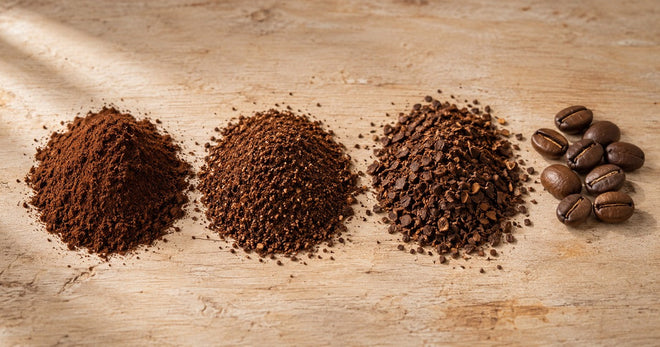
Pick the grind by brewing method. The NCA's rule: the longer coffee and water are in contact, the coarser the grind.
| Method | Grind | Looks like |
|---|---|---|
| Espresso | Fine | Table salt |
| AeroPress, V60 | Medium-fine | Between table and kosher salt |
| Drip, pour-over, Chemex | Medium | Kosher salt |
| French press, cold brew | Coarse | Rock salt |
Sources: NCA drip and cold brew guides; AeroPress; Hario.

Once the grind is set, the amount of coffee matters just as much. Our guides cover the coffee-to-water ratio for most methods, the French press ratio, and how to brew espresso step by step.
Burr or blade? The NCA recommends a burr grinder: it crushes beans between two burrs and gives a more consistent grind, which lets flavor extract more evenly. A blade grinder works like a food processor; you can learn how long to run it for your method, but it's harder to control.
No grinder yet? You can still buy whole beans: have them ground where you buy coffee and tell them your brewing method. We cover the trade-offs of that option in our guide: do you need a grinder to buy whole bean coffee?
How to store whole beans
The NCA's five storage rules, in short: buy amounts you'll finish in one or two weeks; move beans from retail packaging into an airtight container; keep them in an opaque container; store them somewhere cool and dark, away from cabinets near the oven or dishwasher and spots with strong afternoon sun; and wait to grind until just before brewing.
How to choose whole bean coffee
Our team looks at four things on any bag, ours included:
- Origin you can trace. A region, a farm or a cooperative, not just a country. The NCA explains that single-origin coffee comes from one farm, region or country and carries a strong sense of place.
- Variety. Names like Caturra or Castillo tell you which arabica plant the coffee came from.
- A quality score, if the seller publishes one. On the SCA's cupping scale, 80 points and up is specialty grade.
- Roast level that fits how you drink it. The NCA notes lighter roasts keep more of a coffee's unique character; darker roasts taste more of the roast.
Here's how ours read on those four points:
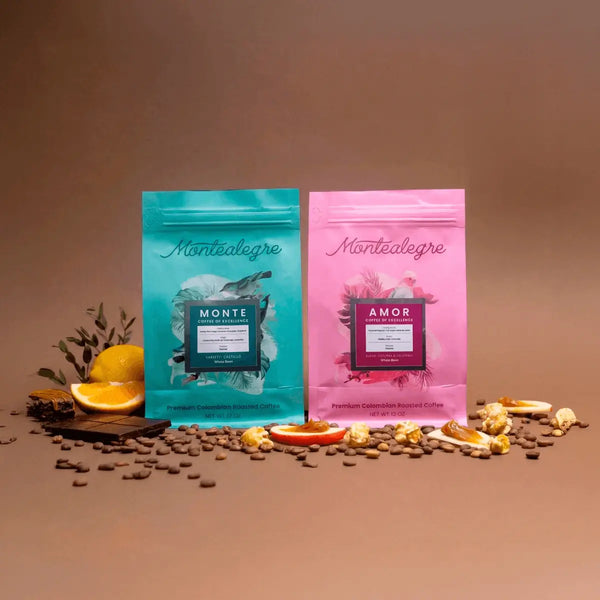
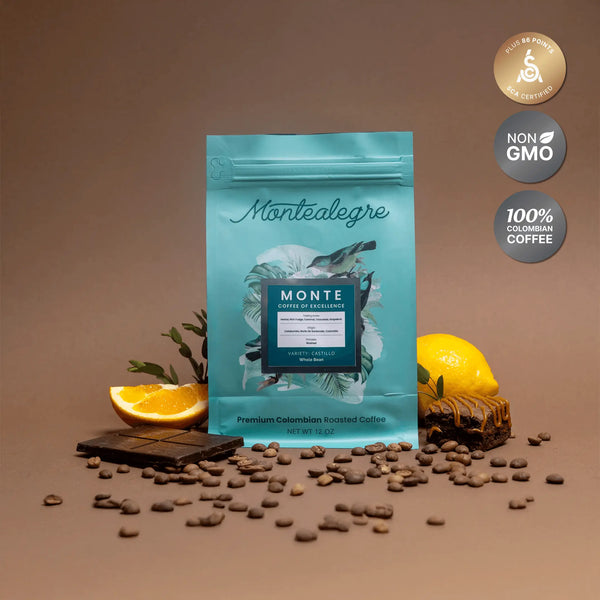
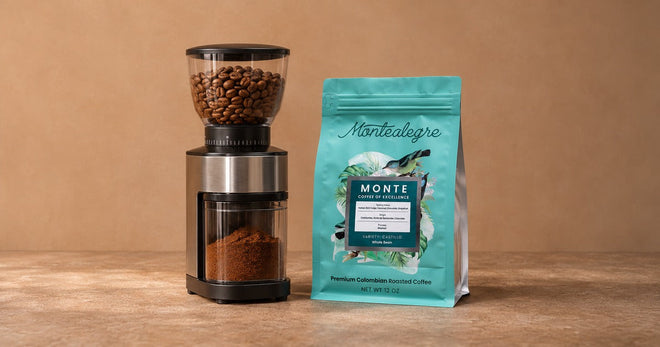
- Monte: Castillo from Catatumbo, Norte de Santander; herbal and grapefruit notes; great with milk; 86 SCA; medium roast.
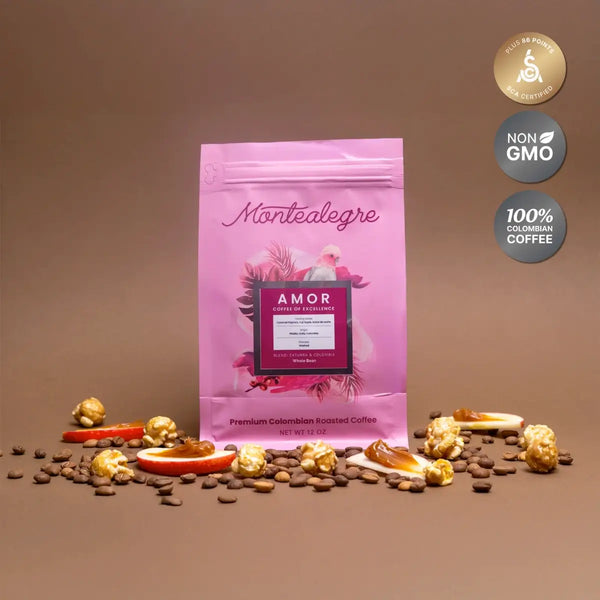
- Amor: Caturra and Colombia from Salado Blanco, Pitalito, Huila, grown by 23 women-led farms; 86 SCA; medium roast.
Both come in 12 oz (340 g) bags; we recommend the whole bean option. The Duo has one of each. Monte and Amor are also available by subscription, which you can pause or cancel anytime; the current discount is shown on each product page.
FAQ
Is whole bean coffee better than pre-ground?
For freshness, yes: the NCA gives opened whole beans 1–3 weeks at room temperature versus 1–2 weeks for pre-ground beans, and recommends grinding right before brewing.
How long do whole coffee beans last?
Opened and stored airtight: 1–3 weeks at room temperature, about 2 weeks refrigerated, 3–4 months frozen (NCA).
Can I grind whole beans without a grinder?
Our team recommends a grinder. If you don't have one, have the beans ground where you buy coffee and tell them your brewing method.
Sources (checked November 9 and 13, 2026)
- NCA storage and shelf life: https://www.aboutcoffee.org/beans/storage-and-shelf-life/
- NCA drip (grinders, grind sizes): https://www.aboutcoffee.org/brewing/drip-coffee/
- NCA cold brew (grind rule): https://www.aboutcoffee.org/brewing/cold-brew-coffee/
- NCA varieties (single origin): https://www.aboutcoffee.org/beans/varieties/
- NCA roasts: https://www.aboutcoffee.org/beans/roasts/
- SCA cupping scale (PDF copy): https://www.scith.coffee/wp-content/uploads/2021/03/SCA-Protocols-_-Best-Practices.pdf
- AeroPress: https://aeropress.com/pages/how-to-use
- Hario UK: https://www.hario.co.uk/pages/brew-guides-v60-expert