The Montealegre Journal
Grinding Coffee Beans: Grind Size Chart for Every Method
 By Juan Pablo Jubiz, Co-founder, Montealegre Coffee ·

In this guide
Quick answer: Match the grind to how long the coffee touches water: fine like table salt for espresso, medium-fine for AeroPress and V60, medium like kosher salt for drip and pour-over, coarse like rock salt for French press and cold brew. Then adjust: bitter means coarser, watery means finer.
The rule behind every grind
The National Coffee Association's general rule: the longer coffee is in contact with water, the coarser the grind should be. Espresso brews in seconds and needs a fine grind; cold brew steeps for hours and needs a coarse one (NCA, cold brew).
Grind size chart
| Method | Grind size | Looks like | Contact time | Source |
|---|---|---|---|---|
| Espresso | Fine | Table salt | 20–30 s | NCA |
| AeroPress (freshly ground) | Medium-fine | Between table and kosher salt | ~1 min | AeroPress |
| V60 | Medium-fine | Between table and kosher salt | ~2½ min | Hario |
| Drip / pour-over / Chemex | Medium | Kosher salt | 2–4 min (pour-over) | NCA |
| Moka pot | "Moka-ground," not too fine | — | Low heat, until it gurgles | Bialetti |
| French press | Coarse | Rock salt | ~4 min | NCA |
| Cold brew | Coarse | Rock salt | ~12 h | NCA |

Every grinder numbers its settings differently, so use the texture, not the number. For full recipes, see our guides to espresso, the V60, the French press and cold brew. As one reference point, AeroPress suggests settings 11–13 on a Baratza Encore for its medium-fine recipe. Then taste: bitter means go coarser, watery means go finer.
Burr vs. blade grinders
| Burr grinder | Blade grinder | |
|---|---|---|
| How it works | Crushes beans between a moving wheel and a fixed surface | A spinning blade chops the beans |
| Consistency | More consistent; flavor extracts more evenly | Inconsistent particle sizes |
| Control | Set the grind size | Grind time sets the size; harder to control |
| Heat | Less likely to overheat the grounds | — |
| Best for | Every method, especially fine grinds like espresso | Drip or press if it's what you have |
Source: NCA drip coffee guide and cold brew guide.
If you're starting out, our team recommends spending on the grinder before the machine. A consistent grind makes every other change (ratio, time, temperature) easier to judge.
How to adjust by taste
| If your coffee tastes… | It's probably… | Do this |
|---|---|---|
| Flat, watery | Under-extracted (too coarse) | Go one step finer |
| Bitter (or sour, per the NCA) | Over-extracted (too fine) | Go one step coarser |
| Muddy in a press or cold brew | Too many fines (our team's read) | Go coarser; use a burr grinder |
| Pour-over drains very slowly | Too fine | Go coarser (Hario) |

The first two rows come straight from the NCA's grind-and-taste guidance. Change one step at a time and keep the ratio the same so you can tell what helped.
When to grind
Right before you brew (here's why whole bean beats pre-ground). The NCA notes that grinding whole beans immediately before brewing guarantees maximum freshness; grounds keep their freshness 1–2 weeks once opened, versus 1–3 weeks for whole beans (NCA, storage). To keep beans fresh until you grind them, see should you freeze coffee beans?.
Beans that let you choose the grind
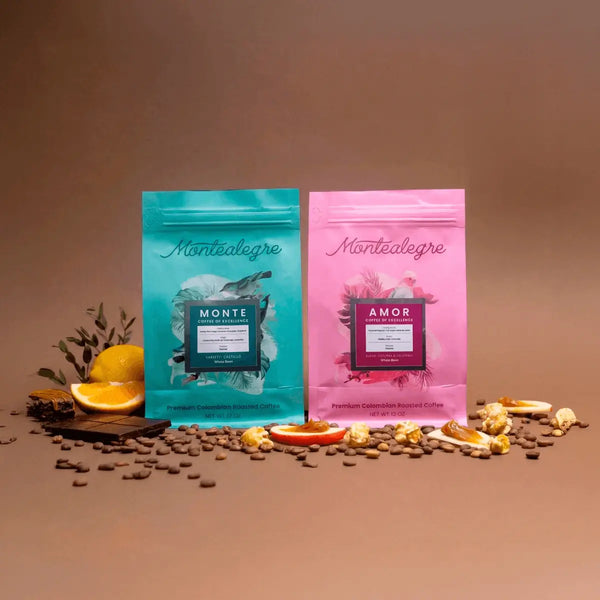
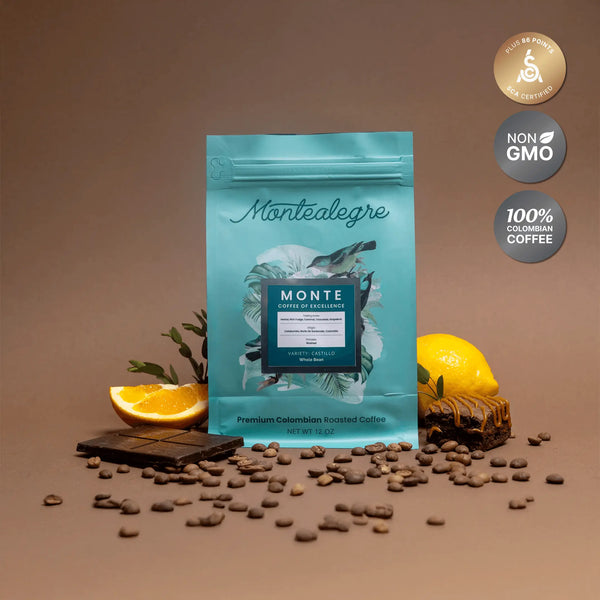
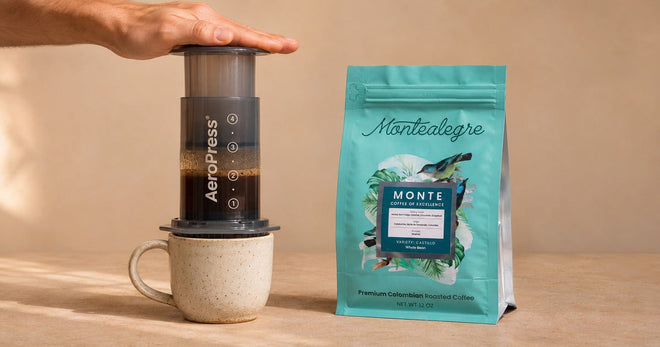
Monte and Amor are available whole bean in 12 oz (340 g) bags, so one bag can go fine for espresso and coarse for a press. Both are 86 SCA and medium roast. Monte (Castillo from Catatumbo) is our pick for milk drinks; Amor is a Caturra and Colombia blend from 23 women-led farms in Huila.
FAQ
What grind size for drip coffee?
Medium, like kosher salt (NCA).
What grind size for French press?
Coarse, like rock salt (NCA).
What grind size for espresso?
Fine, like table salt (NCA). Adjust by shot time: finer if the shot runs fast, coarser if it runs slow (Breville's espresso guide).
Is a burr grinder worth it?
The NCA recommends one because it gives a more consistent grind and more even extraction.
Sources (checked November 15, 2026)
- NCA drip: https://www.aboutcoffee.org/brewing/drip-coffee/
- NCA cold brew: https://www.aboutcoffee.org/brewing/cold-brew-coffee/
- NCA espresso: https://www.aboutcoffee.org/brewing/espresso/
- NCA pour-over: https://www.aboutcoffee.org/brewing/pour-over-coffee/
- NCA French press: https://www.aboutcoffee.org/brewing/french-press-coffee/
- NCA storage: https://www.aboutcoffee.org/beans/storage-and-shelf-life/
- AeroPress: https://aeropress.com/pages/how-to-use
- Hario UK: https://www.hario.co.uk/pages/brew-guides-v60-expert
- Bialetti Moka Express: https://www.bialetti.com/it_en/moka-express.html