The Montealegre Journal
Do Espresso Beans Have More Caffeine Than Regular Coffee Beans?
 By Juan Pablo Jubiz, Co-founder, Montealegre Coffee ·

In this guide
Quick answer: No. "Espresso beans" aren't a different kind of bean, so they don't carry extra caffeine. Per serving, a 1 oz espresso shot has about 63 mg of caffeine and an 8 oz cup of brewed coffee about 96 mg, so one cup of drip usually gives you more.
Why "espresso beans" isn't a bean
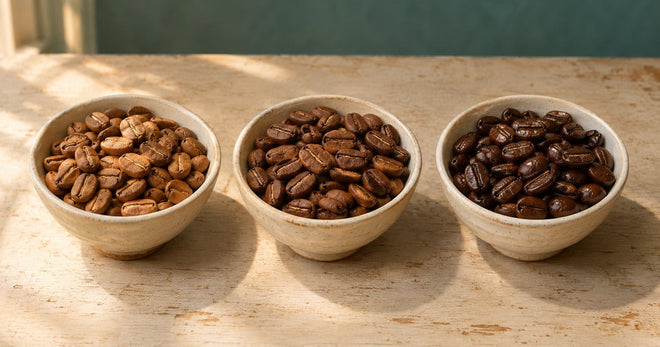
"Espresso beans" aren't a different kind of bean. As the National Coffee Association puts it, espresso is not a type of coffee bean or even a roast; it's a drink named after the way it's brewed. Bags labeled "espresso" are coffees the roaster thinks will suit that method, often roasted medium to dark, according to the NCA's roast guide.
Caffeine per serving vs. per ounce
| Drink | Caffeine | Source |
|---|---|---|
| Espresso, 1 oz (one shot) | About 63 mg | Mayo Clinic; NCA citing USDA |
| Brewed coffee, 8 oz | About 96 mg | Mayo Clinic |
| Brewed coffee, per ounce | 12–16 mg | NCA citing USDA |
Ounce for ounce espresso is more concentrated, but one cup of drip usually gives you more caffeine than one shot. A double shot (2 oz) gets you to roughly 126 mg (2 × 63), which is more than one 8 oz cup.

What actually changes caffeine
- The species. Robusta beans have about 50–60% more caffeine than arabica, per the NCA's varieties page. That difference is real; the word "espresso" on the bag isn't.
- The roast. The NCA notes light roasts have slightly more caffeine; dark roasts taste stronger but aren't higher in caffeine.
- How much you drink. Serving size matters more than the label.

Can you use regular beans for espresso?
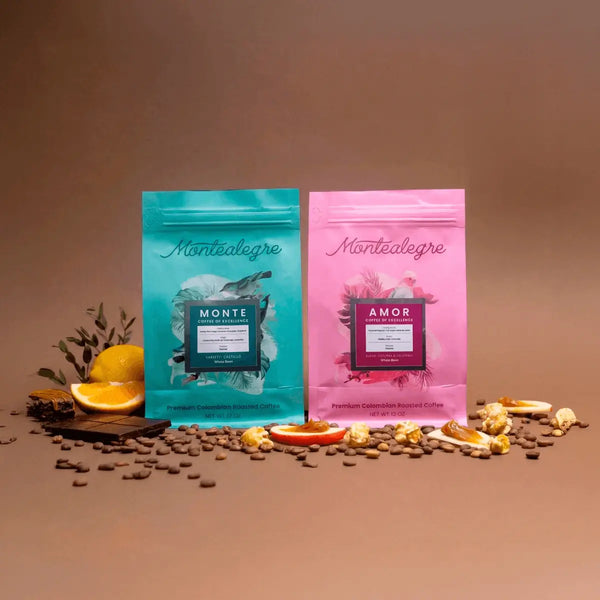
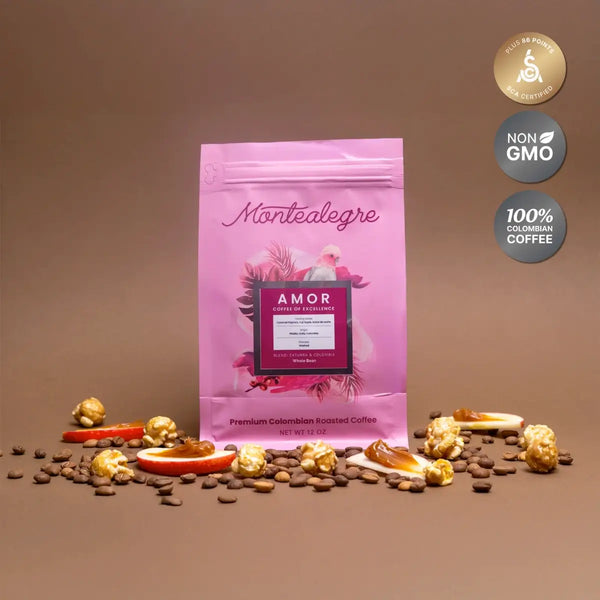
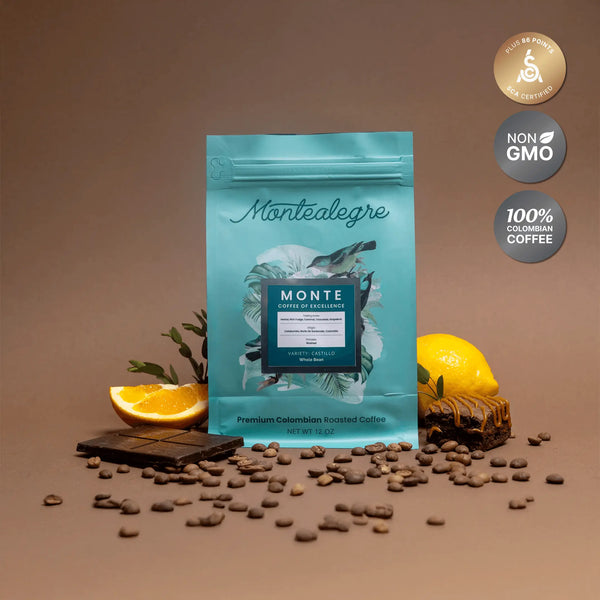
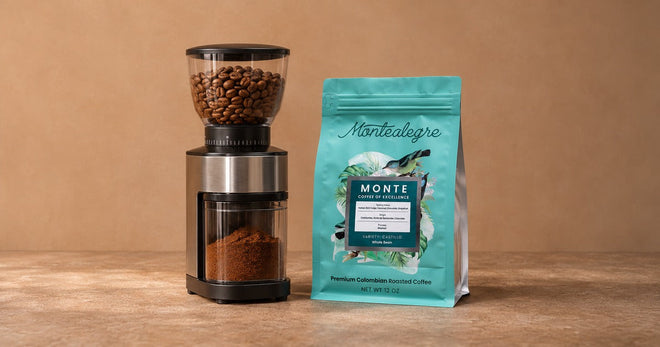
Yes. Our espresso beans guide covers that question in detail. Monte and Amor both work for espresso as well as for drip, pour-over and French press. Monte is our pick for milk drinks; Amor is a Caturra and Colombia blend from Huila. Both are 86 SCA and medium roast. We don't publish a caffeine number for either coffee; the figures above are general averages, and Mayo Clinic notes that caffeine content varies with factors such as how the coffee is grown and how long it brews.
Ready to pull a shot? See our step-by-step guide on how to brew espresso at home.
Sources (checked November 9 and 12, 2026)
- NCA espresso: https://www.aboutcoffee.org/brewing/espresso/
- NCA roasts: https://www.aboutcoffee.org/beans/roasts/
- NCA varieties: https://www.aboutcoffee.org/beans/varieties/
- Mayo Clinic, caffeine content: https://www.mayoclinic.org/healthy-lifestyle/nutrition-and-healthy-eating/in-depth/caffeine/art-20049372